Thursday, July 28, 2011

Dog Attack


Kathy and I have a dog that is very loving towards us but has a genetic loading to be very protective of his pack. A good part of my energy when with him is to be sure that he doesn't put his dominance trip on some unsuspecting stranger. We love him, but do not trust him. This helps me to understand but not condone how some dog owners do not step up to the plate on the responsibility dimension. But on to the case in point.

I have a bike route around my neighborhood that is kind of boring but is a good cardio workout. It goes up a steep hill, then back towards the East with another small hill, then down a steep hill to the South and loops West back to the first hill which is called Fury.

As I was going up the steep Fury grade, I noticed that there was a runner on the other side of the median with a pit bull unleashed. As with the many places where it is heads up for cars doing dangerous things, my attention ramped up. My second glance at the dog noted that he seemed to be tracking away from his master and toward my position. I was on the upper part of Fury, where my bike speed usually required getting out of the saddle to pump at about 8 mph. My next glance noted that he was closing the distance big time. No way to turn downhill, because he was already there. Saw that he was going to catch me on the hill on my bike, which would probably mean he could get my leg and possible knock me down. Not a good option for yours truely.

I turned on to a flat side street and accelerated enough to buy time to get out of the clip pedals and on my feet. I positioned the bike between me and the dog and held onto the frame of the bike to use it as a shield. I poked the bike at him and tried to not let him flank me. After doing this dance for a while, the owner showed up. He is yelling at his dog, with very little effect. After 30 or 40 seconds, he gets hold of the dog's collar and I noted how strong this animal looked. The owner said "Hey I'm very sorry man". He was a big guy and the dog was still struggling towards me. With an adrenaline powered shrill voice I said "You should have that thing on a leash", as I pedaled away from this exciting encounter.

My heart stopped pounding through my chest at about the time I made it back to home. I felt a strange satisfaction at having survived an attack by a breed of dog that is kind of close to my dog Red in its aggressiveness. I'm kind of wondering if constant vigilance may not be enough to prevent Red from doing to some stranger what had been done to me.

Saturday, June 4, 2011

Mary McCormick July 7, 1921-May 31, 2011


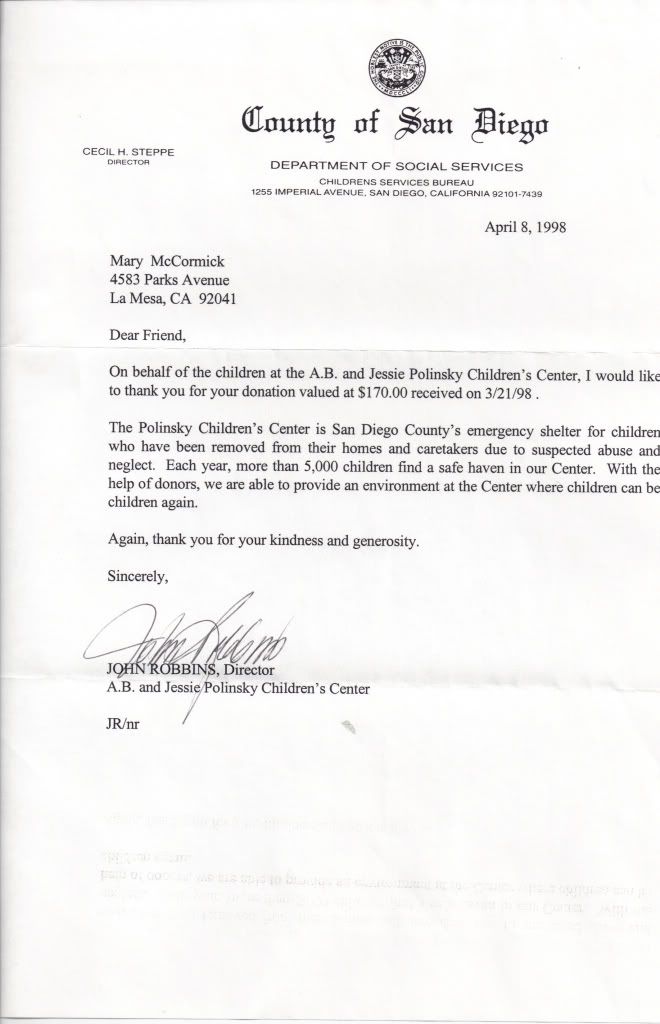
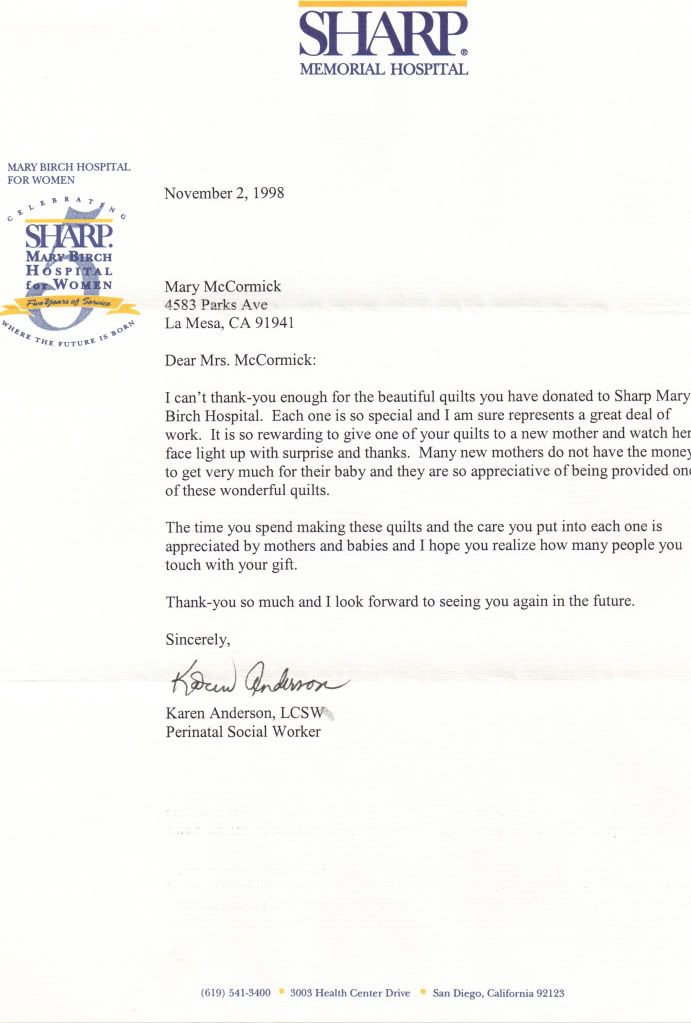
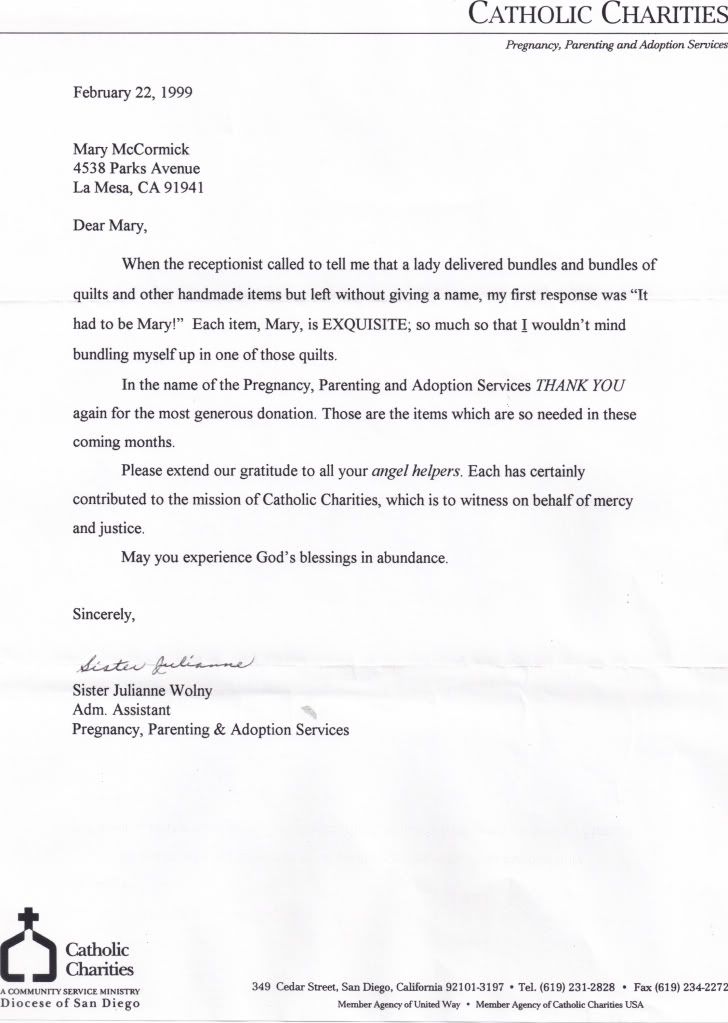
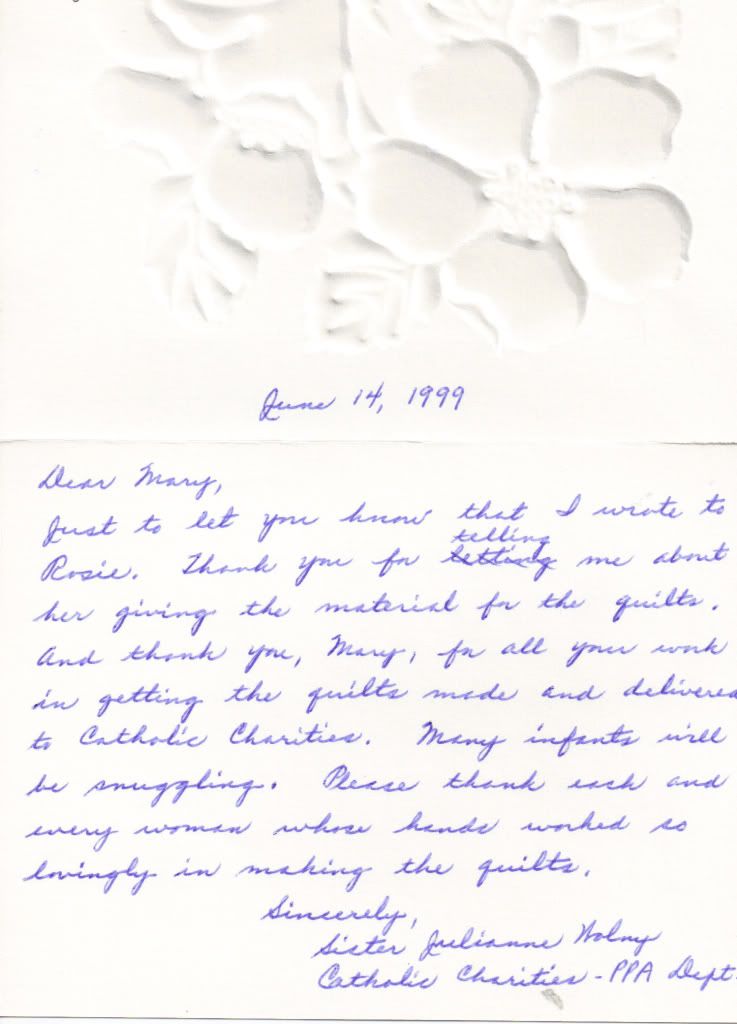
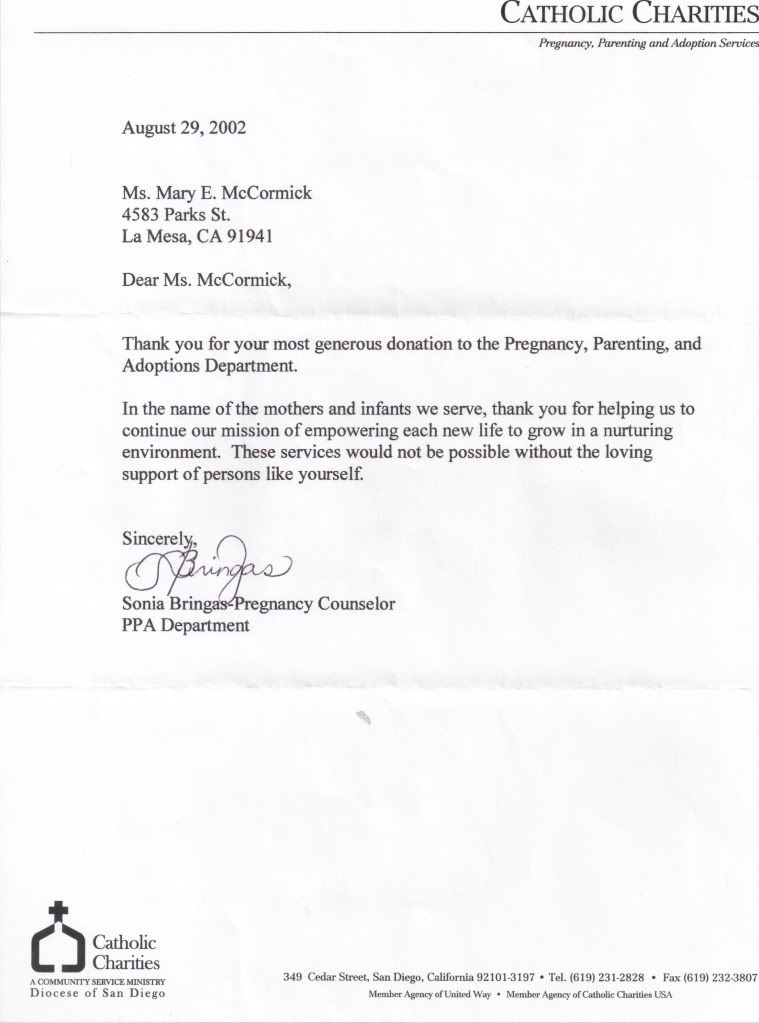
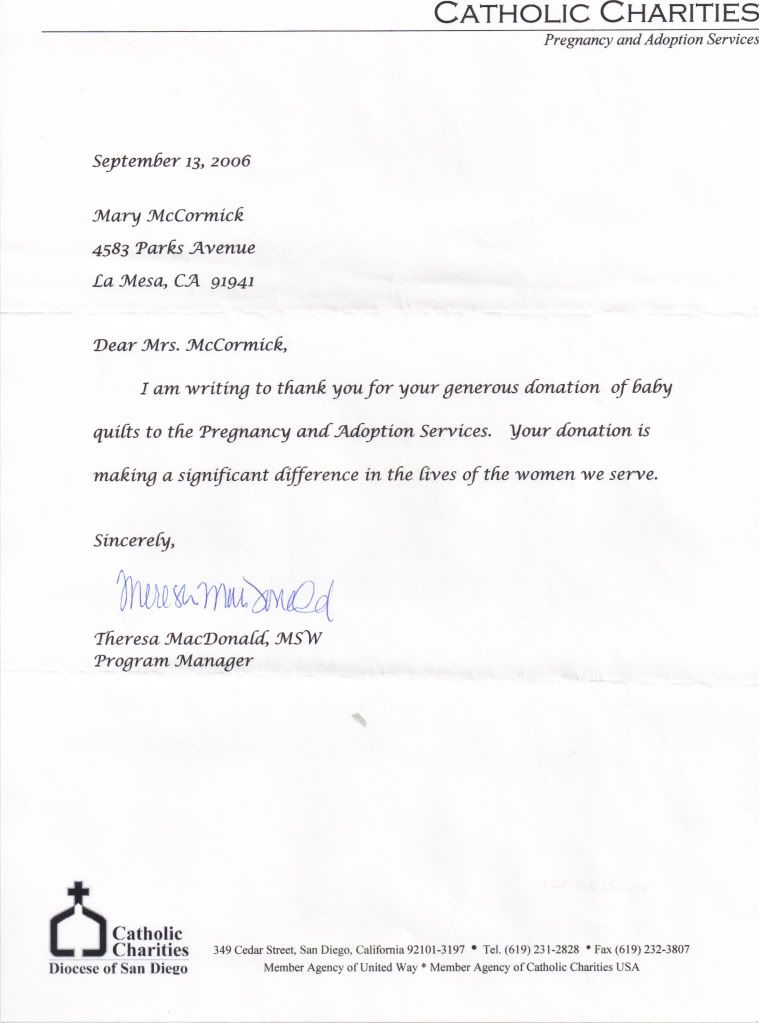
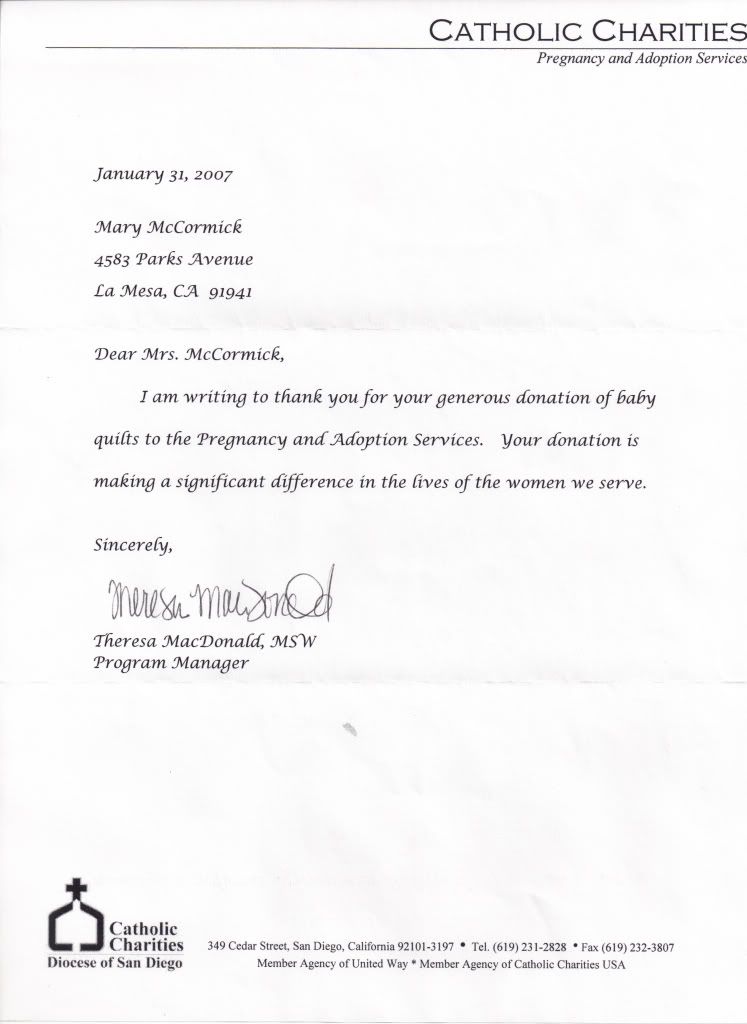
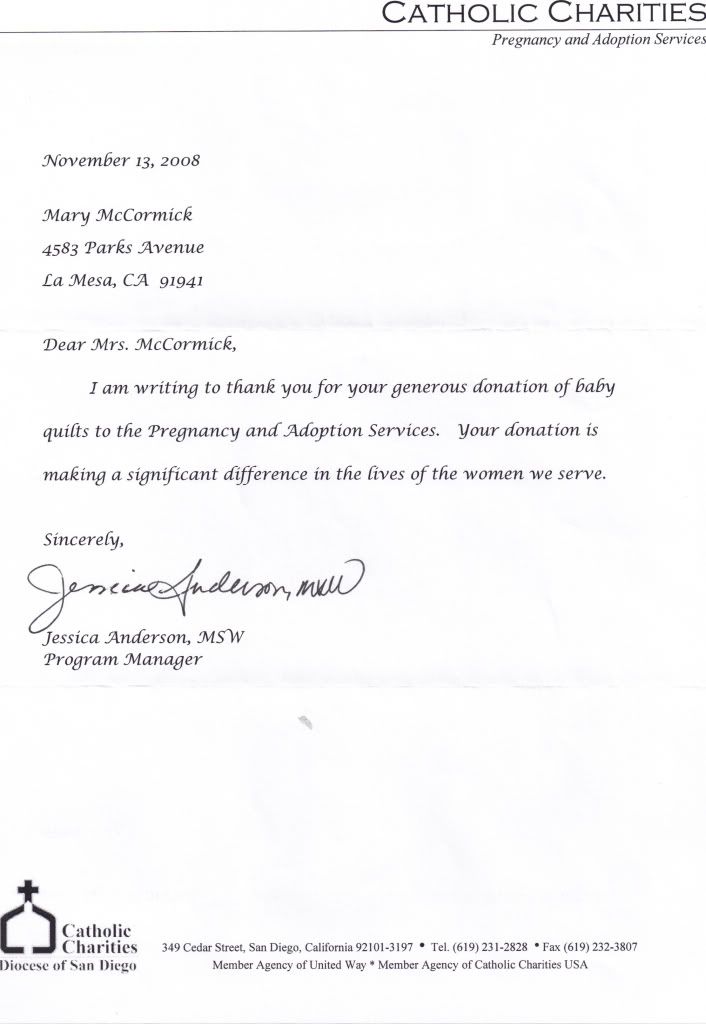
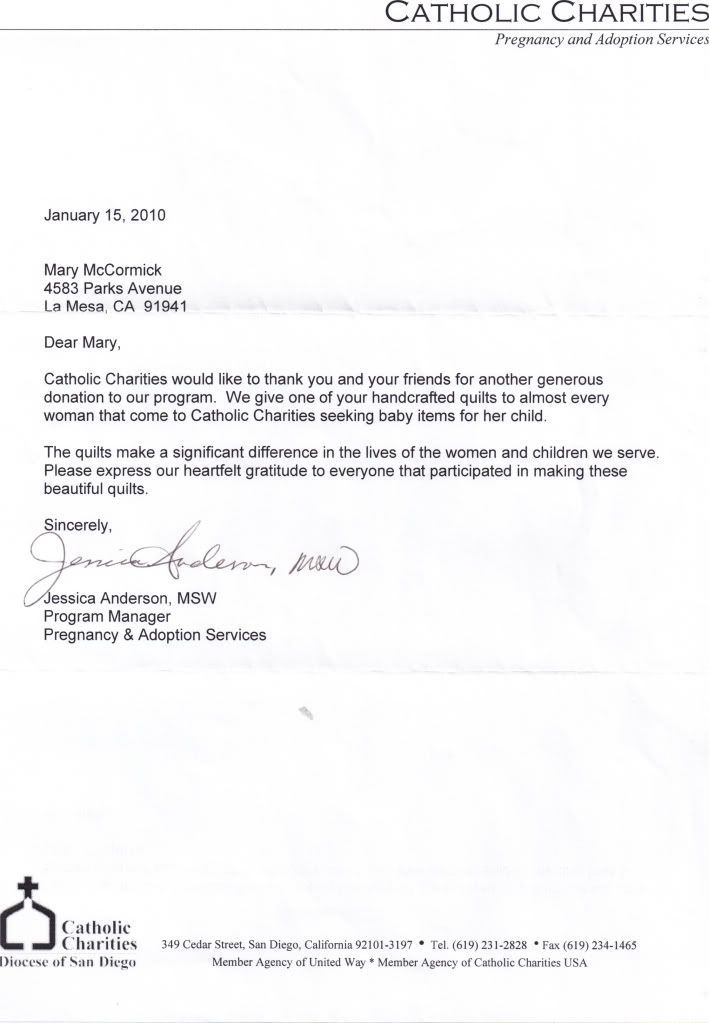
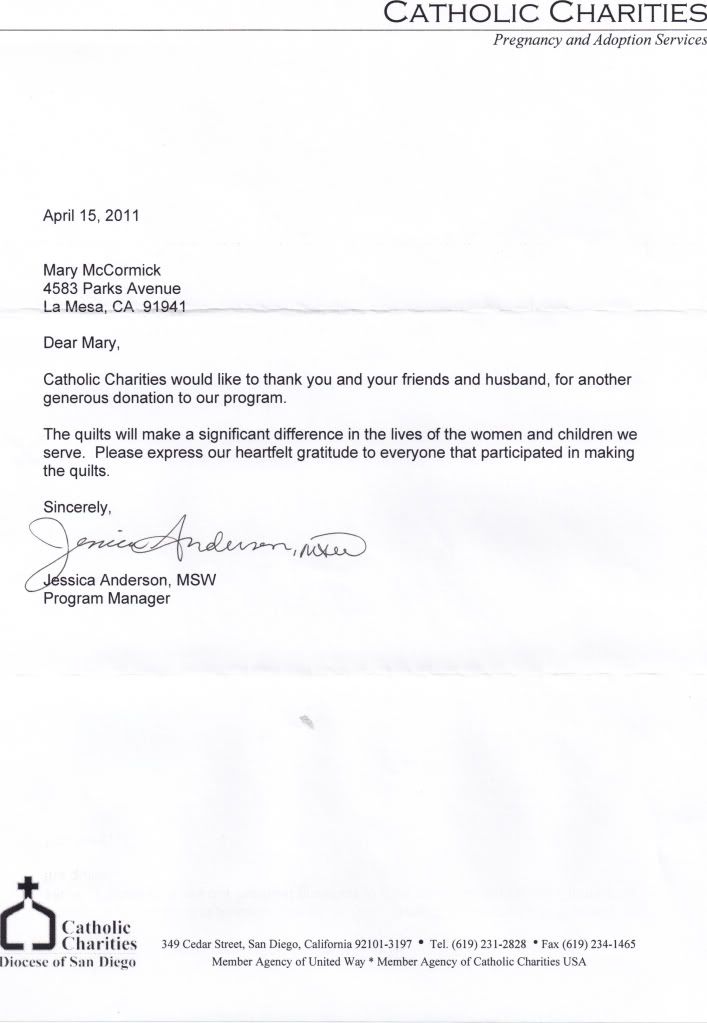
Mary Elaine McCormick, of La Mesa, passed away peacefully in her home at the age of 89. She was born in San Diego to Ben and Gertrude Hoffner. Mary graduated from Hoover High School and Santa Barbara State College. She married her high school sweetheart, Joe McCormick, on December 24, 1942 in Yuma, Arizona. Mary was a wonderful wife, mother and a loyal, giving friend. Mary enjoyed the outdoors as she and her husband traveled extensively in their motorhome and enjoyed many, many trips across the United States together. She was an avid gardener and talented seamstress who sewed many of her four children’s clothes as they were growing up. Mary, along with her quilting friends, made and donated thousands of baby quilts, bibs, knitted caps and booties for several local charities, including Catholic Charities, Polinsky Children’s Center and Sharp Mary Birch Hospital.

Mary is survived by her husband of over 68 years, Joe McCormick, four children John McCormick (Kathy), Trudie Keough (Tom), Marty McCormick (Leslie), Eileen Bird (Dan), nine grandchildren and five great-grandchildren.

The above facts in my mother’s obituary provide the major markers in a full and productive life but perhaps need some detail to better understand who she was as a person. Her father, Ben Hoffner, was a self made man who came to California at the age of 10 from Wisconsin. He became a backcountry ranger in the Sierra, who traveled his territory by horseback with a pack string. After marrying a school teacher in Ely Nevada, he gave up the freedom of the hills for a more steady job at North Island. He taught himself Greg shorthand and rose to be the civil servant head of the supply department for the base. He was a co-founder of the North Island Credit Union though he never had a high school education. He loved being outdoors and gardening was what he did after work. Vacations involved camping in the mountains and Mary enjoyed this very much, his wife not so much.

Mary’s passion for books and education were heavily influenced by her mother. Her graduation from Santa Barbara State College with a major in home economics probably reflected that influence. Mind you, the demographics of college graduation for women were much different in 1943. As an only child, she had the confidence to believe in her own judgment over the herd or anyone in authority. An example of that was when she went to a priest at Blessed Sacrament to get permission to marry Joe, who had joined the Army Air Corps at the start of World War II. The priest wanted my father to receive instruction because he wasn’t a Catholic. Mary said this was not possible because Joe only had three days of leave from pilot training. It became a contest of wills. Mary then made the ultimatum. If permission was not granted, she would get married outside the church. The priest wisely relented. All the family chipped in their gas coupons and Ben loaned his car so they could get married in a small church in Yuma.

The Parks street home in La Mesa was originally owned by her father Ben. A chicken farm was located close to it in the 1940’s and he used a wheelbarrow to bring the fertilizer to the back yard. Mary used this great soil as a starting point for her composting efforts. The back yard became the canvas for her artistry with growing things. In addition to avocado, tangerine, fig and apple fruit trees, she specialized in vegetables like beets, pod peas, potatoes, lettuce and chard. Mixed with the edibles came flowers for every season, orchids, perennials and annuals which kept the yard in color year round. Her excellent cooking skills made good use of the bounty produced by her organic and local approach to food production.

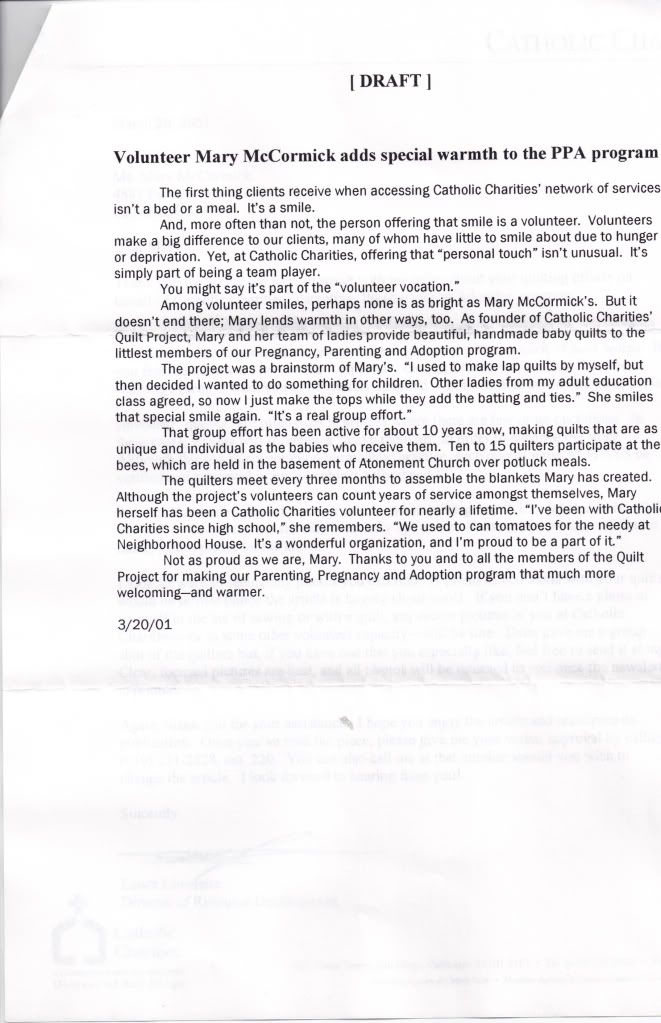
Mary was not the kind of person who talked about her religion, but rather acted it out in her daily life. One example of this was the quilting group she organized from friends made at various sewing classes. Groups of up to twenty women would come to the Parks Avenue home to sew and tie the quilts. A pot luck lunch would be the only interruption in their efforts. In her words “When I have made about 80 quilt tops I invite some friends from quilting class to meet at my house and we put the backing and batting and tops together by sewing machine.” These quilts were initially given to the home for unwed mothers at Blessed Sacrament in the early 90’s. As the production quantity increased, they were also given to the Polinsky Children’s Center, Sharp Memorial Hospital and Catholic Charities. This year the group got together in April and produced 400 quilts. These fine women showed by their good works the true meaning of charity and Christianity.

My mother was kind to others without being meddlesome. Even in the final stages of lung cancer, she had kind words for her caregivers. She was not a whiner and never complained about the gradual loss of freedom the disease made her fate. She refused palliative medication and died as she lived, on her own terms.

.

Sunday, May 1, 2011

Quilting for Charity

Quilts ready to go


Hard at work in the kitchen work area


Mary in the sewing room


Happy Customer


"The American way is to first feel good about yourself, and then feel good about others. But spiritual traditions say it's the other way around - that you develop a sense of goodness by giving of yourself." from Thomas Keating, Benedictine monk.

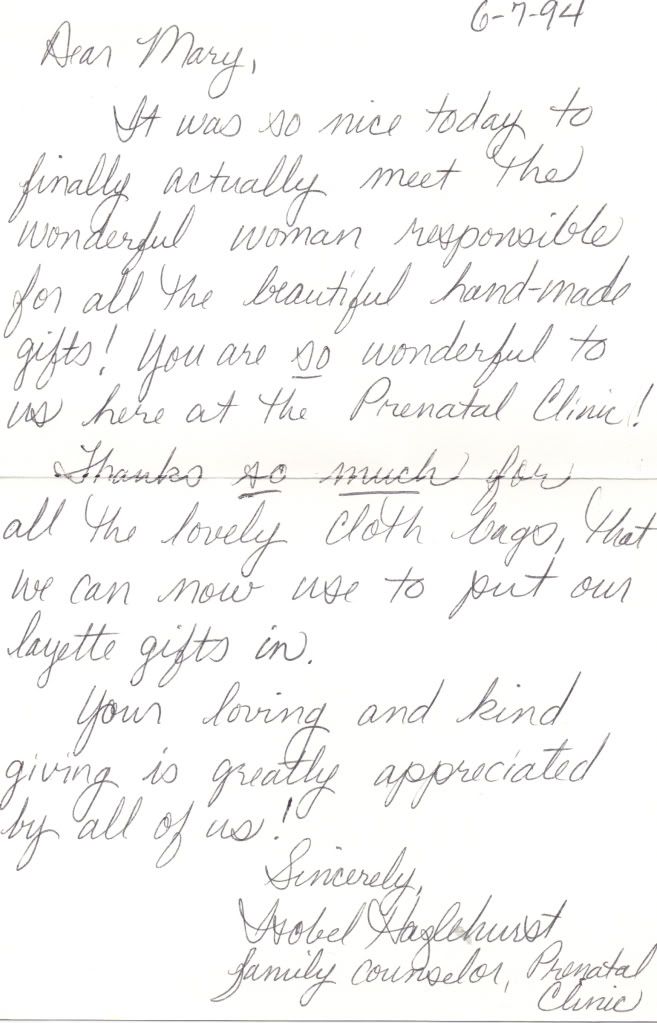
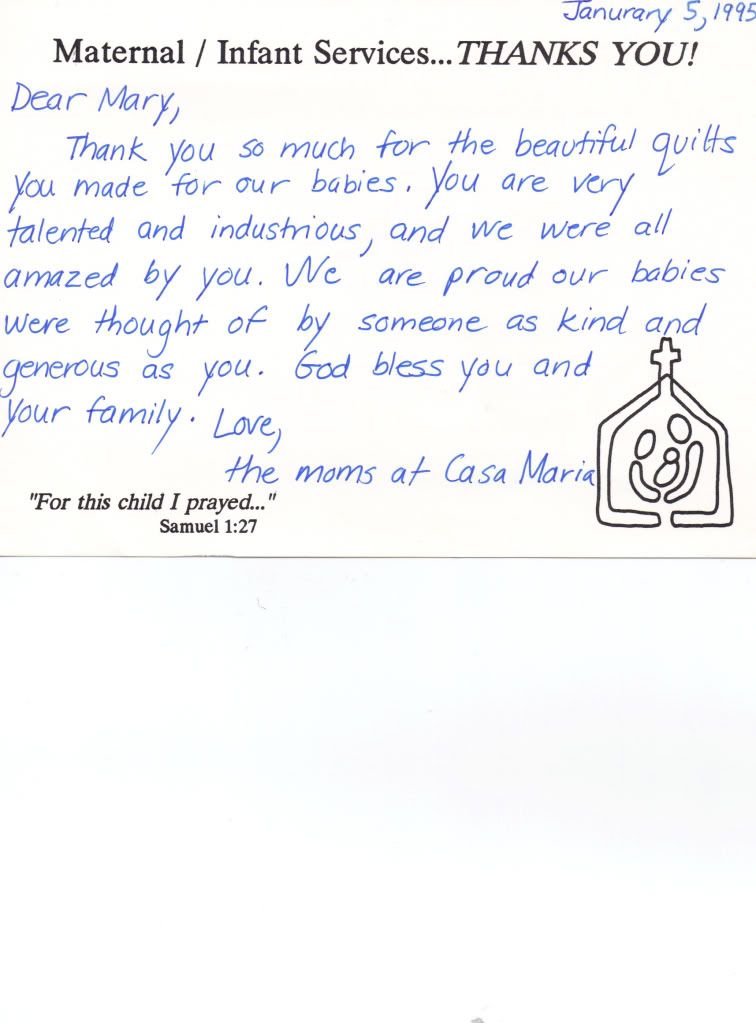
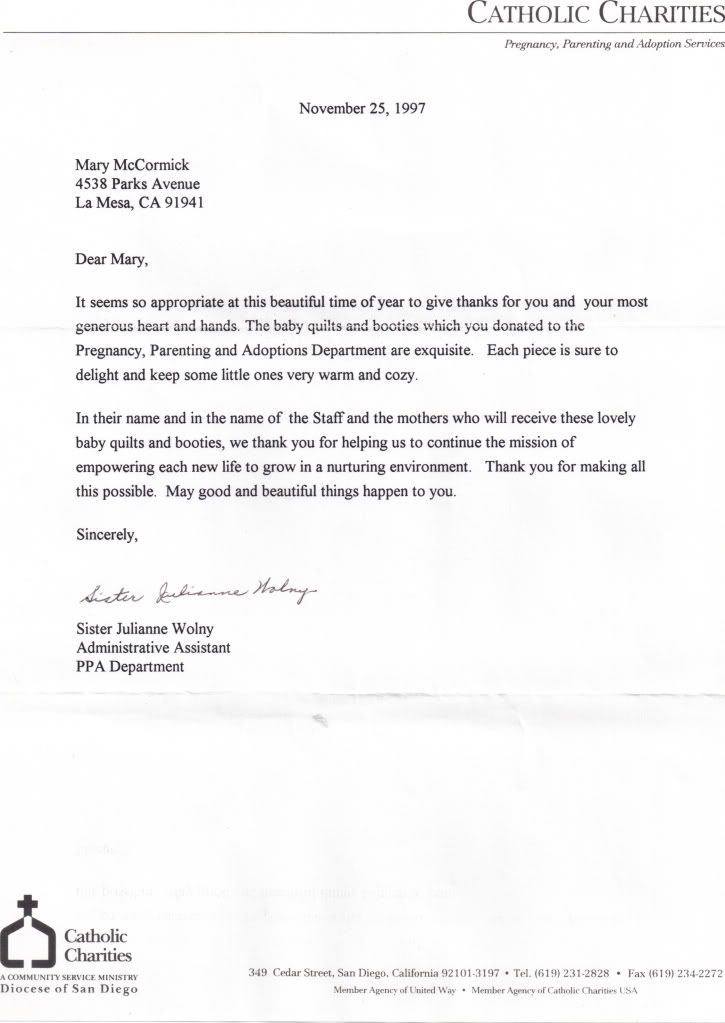
My mother and her friends have been providing blankets to Catholic Charities, Sharp Hospital, Grossmont Hospital, Polinsky Children's Center and Casa Maria for over 20 years. Their blankets make the daily routine of single moms and others a bit easier. My mother wrote a brief history of the project:

I first took a bunch of quilts to Blessed Sacrament Church for the women and children living there in the nun's house. This must have been in the late 80's or early 90's.

Later we started delivering the quilts to the current delivery location.

Donations of material, batting and thread come from many people: friends, quilting friends and from a quilt shop call Rosie's Calico Cupboard.

When I have made about 80 quilt tops I invite some friends from quilting class meet at my house and we put the backing and batting and tops together by sewing machine.

The quilts are then tied and stitched. At the end of the day some women take them home to tie them, as it takes a lot time tying them.

All of us work hard all morning then have timeout for a potluck lunch, then back to work.

During a year over 200 quilts are made for charity. This group of wonderful women enables us to make many quilts and some clothing for children. The quilts are usually crib size, which will be usable until age 5.

A big thanks to Kathy Green, who teaches quilting (and has taught for 27 years). She teaches adult education at Mt. Miguel, Foothills, and San Diego Community College.

Mary McCormick (written in 1999)


Tuesday, April 12, 2011

David Brooks "The Social Animal" and My Mother, Mary McCormick


The central thesis of David Brooks “The Social Animal” is that the linear, logical decision making part of ourselves is but an illusion and that our abilities to read the character and intention of others is at the core of our being. He describes a typical couple’s courtship and child raising through the eyes of current scientific evidence.

One of the factoids that hit home was that marital satisfaction is a U shaped curve. High satisfaction when first married, the low point when children are in adolescence and again a high point when the children leave. He cites an incredible wealth of data to support the depth of unconscious capability to foster bonding between mother and child. Of course, this bonding is kind of obvious, especially when the cold fact that the average mother loses 700 hours of sleep during the first year. And, more importantly, most of the greedy little guys and gals escape with their mother’s love unscathed.

He documents that there are critical exposures that influence motivation and passion. For me, one of those was the garage of Andy Anderson. It was on the street on the way to Saint Rose of Lima, where I walked to school most days. All kinds of weird antennas were about the house and I could see some kind of mysterious radio complex in the far corner. Mind you, this was way before cell phones and color TV.

I guess my age was close to eleven or twelve. Something about the mystery of being able to communicate with people around the world fascinated me. I got up the nerve to walk up the driveway and talk to Andy. He was a big man, perhaps six foot five and 250 pounds and an obvious leader of men. He told me in no uncertain terms that there was no future in my wanting to become a ham operator until I learned the Morse Code. I went home with my tail between my legs. How was I going to pass this juggernaut?

My mother consoled me and said we would learn the Morse Code together. My father, who was studying to be an electronics mechanic, used a j38 key, batteries and a buzzer from a door alarm to make a practice setup.


My mother studied the dots and dashes, which compose the letters of the Morse alphabet. She would send the characters hour after hour and I would dutifully decode them back to English. This was in addition to making meals, keeping the house and looking after the rest of my three siblings.

My father and I both passed our license exam, which consisted of code and electronics theory. David Brook’s book brought back some of the intense emotions that I felt when stymied by this hurdle of dots and dashes. It took a mother’s love to find a way for her son to reach his goal.


David Brooks makes this great thought. “If the outer mind highlights the power of the individual, the inner mind highlights the power of relationships and the invisible bonds between people. If the outer mind hungers for status, money and applause, the inner mind hungers for harmony and connections- those moments when self-consciousness fades away and a person is lost in a challenge, a cause, the love of another or the love of God.”

Sunday, January 30, 2011

San Jacinto


It seemed like the alarm didn’t go off. I looked at the clock and it was already 5 after 5. Not sure that I can make the 8:00 tram from Palm Springs. I had a great day yesterday sailing (link to sail), but in the evening had received a call concerning an email being circulated by a “friend” that tried to make me look like an idiot . The betrayal feeling was the emotion that led to sleeplessness, which in turn led to taking a sleeping pill and not hearing the alarm. Such is life. Kind of feeling low energy, but after getting some coffee was ready to make the 150 mile drive to the tram .


San Jacinto is on the South side of 10 as you go toward Palm Springs. It is 10,834 feet high and can be seen from San Diego or more easily from out at sea . Although there are many trails to the upper reaches from the West side, one shortcut is to take the Palm Springs Ariel Tram. It starts out at 2643 ft elevation And ends at 8516. It takes about 11 minutes to achieve this altitude. I like the tram.

Afra making sure that we are where we should be

It was very icy last week when Afra and I tried skiing up a new route that Dave had found. This route headed about 300 degrees from Round Valley. The trail to that valley from the tram is well defined, but runs up a creek bed and is usually rock hard. Snowshoe people usually avoid the trail like the plague and head directly up the steep but less icy Tamarack drainage. Afra is a very positive Dutch lady, who dismissed our struggles with the icy Round Valley trail as “good exercise”. She was sure that everything was going to loosen up with the coming sunshine. I was not so optimistic. At 10,000 feet it was getting more like boilerplate, so we called it a day. We could see the slopes of Jean Peak (link to Jean Peak ski) and San Jacinto, so the route was proven, without benefit of GPS. The edges sang or should I say shrieked on the way back, but no one got hurt and it was quite exciting.

I made the first tram , with a few minutes to spare. In the car were two rangers, one lady with her petrified kid, a fellow gray snowshoer, a snowshoe couple, and the tram operator. One ranger is giving a summary of the personnel experience levels, problems and a dismal report of the dangerous conditions on the mountain. I was glad to get off the tram before hearing more good news. We rushed down the ramp toward the ranger station, to pick up a permit. The ranger at the desk squinted with a frown when I told him the route was 300 degrees from Round Valley, but didn’t come right out and say that a solo hiker shouldn’t be doing this route. I had a plan to mitigate the risk, which involved a cell phone and my runner’s Garmin 201, which can get lat long on a position. Anything goes wrong, call in the lat long and wait for the sled. Unfortunately, the Garmin locked up on the tram ride and my cheap pay as you go phone never got service.

I was the first one up the trail with my microspikes (link to pictures of microspikes). I had wished all last week’s trip that my gear included these little wonders. At less than a pound, they go on and off easily and provide excellent grip on trail type steepness. With two poles for balance, they allow fast hiking on icy trails. My backup gear included snowshoes for deeper snow (never used) and an ice axe, in case you get somewhere that a fall will result in a slide for life. Going solo in icy conditions, I wanted to be on my feet rather than on skis.

Got the Garmin to reset by a sequence of frantic button smashing at Round Valley. It is at 9000 foot and it took about an hour from the ranger station. Didn’t bother with the compass, because the route just follows the contour up the right side of the valley, then heads West for a while and then back to a little break in the flank of Jean Peak. My personal problem has pretty much receded out of the picture. My footing is good and the Boreal mountain boots can penetrate into the steeper snow to provide good purchase. I try to breath in through my nose and accentuate the out breath through my lips. As it gets steeper, I do this with each step. One step breathe in, another step breathe out. The breathing at altitude is kind of a natural pranayama. The trees look healthy and tall. Their shadows provide harder snow, which makes progress easier. The more your feet sink, the slower you go and the more energy expended. Just like sailing in a light wind, you go back and forth rather than heading directly toward an objective.

I’m kind of wondering where everyone is. Last Sunday, we saw at least ten people on the flank of San Jacinto or close to this part of the circ valley defined by Jean Peak and the former. I haven’t seen anyone. Even the wind is quiet. It’s a little unnerving. I pass the prominent boulder we used for a backrest last week. I feel pretty strong, but stop and munch on a sandwich to be sure that there is enough fuel in the tank. Crossing over to the San Jacinto side of the valley, I look for some tracks to lead the way. I finally settle on some ski tracks, but when I start using them the footing slips out a bit. If I were with someone else, probably would ignore this little surge of adrenalin.

I’m thinking those old thoughts again. Why do I really need to go up this steep slope? It’s been a fun day, but is it really wise to do this alone? A person could get hurt up here. It looks too steep and there are some cliffed out parts with lots of rocks sticking out. Maybe I can come back next week with a friend. I stop while doing all this great thinking. My leg is starting to quiver a little from being in the same position too long. Then the other voice starts. You are 66 and something that you put off may not happen. I tentatively try breathing regularly while kicking the front of my boot into the slope to get more security on each step. I’m feeling better now and it really isn’t that steep or icy. A person could get hurt anywhere, if they don’t pay attention to what is going on around them. My confidence comes back and I’m just back in the present, trying to pick the best route up the flank.

At the top, the grade eases off. I’m at 10,450 and only another 400 feet of elevation to go. Starting to see all the development around Palm Springs, the mountains to the South, the beauty of the snow capped San Gorgonio. This was worth it. At the top, I take a quick peek over the edge toward the North, where the exposure is impressive down to the desert floor. It is seven miles and 10,000 feet to the desert floor, one of the steepest escarpments in North America.

North Face of San Jacinto

It is a little before 1 o’clock, about four and a half hours to the peak. The phone has no service here either, so much for that crutch. Time to start down. Going down is easier than I thought. These boots and microspikes work great. Most of the time a simple heel stomp will give good footing. On the icier parts, simply canting the boot into the slope and giving it a good emphasis at impact makes for a stable platform. A little sliding in the soft snow is OK, nothing out of control so far today.

Finding the little entrance into Round Valley is easier the second time. I’m making great time going downhill on the icy trail from the valley to the tram. Am back to the tram by 2:45, which means the zoo is in full production. However, everything has changed in a subtle but good way for me. I’m laughing at things that might on another day have given a smirk. It’s easy to be nice to people. It’s been a good day.